
In Nunavik, protected areas consist of national parks, national park reserves, proposed biodiversity reserves, one proposed aquatic reserve, and territorial reserves for protected area purposes. They correspond to category II protected areas according to the International Union for Conservation of Nature (IUCN), one of the highest levels of protection. Protected areas thus ensure the protection of territories representative of particular ecosystems and cultures associated with the region.
Protected area statuses
Biodiversity reserves and aquatic reserves
In Quebec, biodiversity reserves and aquatic reserves are generally managed by the Ministère de l’Environnement, de la Lutte contre les changements climatiques, de la Faune et des Parcs (MELCCFP). Their purpose and protection measures are detailed in their conservation plan. Educational or recreational projects may be carried out, but these projects and their associated budgets usually depend on the initiatives of the communities or groups concerned.
In Nunavik, the creation of biodiversity reserves and aquatic reserves is led by the Government of Québec, in partnership with the region’s stakeholders, represented notably by the Kativik Regional Government, the Makivik Corporation, the Naskapi Nation of Kawawachikamach, the Cree Nation Government (for the community of Whapmagoostui) and other local actors.

Rivière-George – Territorial Reserve for Protected Area Purposes © Frederic Poisson, MELCCFP
National parks
In Quebec, national park projects management falls under the Ministère de l’Environnement, de la Lutte contre les changements climatiques, de la Faune et des Parcs (MELCC). Once created, the national parks of southern Quebec are managed by the Société des établissements de plein air du Québec (SÉPAQ).
In Nunavik, since the Sanarrutik Agreement in 2002, work to create national parks is carry out jointly by the Kativik Regional Government (KRG), the Makivik Corporation, and the MELCCFP. On the land, Nunavik Parks (within the KRG) manages these national parks. A sustained participation of the local parties concerned is also involved at all stages (creation, operation).
In national parks, “areas representative of Quebec’s natural landscapes as well as exceptional natural sites are protected […] and enhanced.” Government budgets are included to provide infrastructure (reception pavilions, roads, etc.), development (trails, signs, etc.), recreational activities (e.g., boat rentals), and educational activities (interpretation, hosting school groups, etc.).

Marais Maritime – Territorial Reserve for Protected Area Purposes © Benoit Tremblay, MELCCFP
Territorial Reserves for Protected Area Purposes (TRPAP)
TRPAP status is a transitional administrative status pending the granting of permanent protected status. On these territories, the granting of mining titles and of any authorization relating to mining exploration is suspended. These territories are also subject to moratoriums on all energy and forestry development activities.
Proposed Biodiversity Reserves (PBR) and Proposed Aquatic Reserves (PAR)
A PBR or a PAR has a provisional status for several years. This status means that a process is underway to obtain permanent status as a biodiversity reserve or aquatic reserve. Mining, oil and gas development, hydroelectric projects, and logging are prohibited on these territories.

Rivière-Kovik – Proposed Aquatic Reserve © Catherine Pinard, KRG

Iluiliq National Park Project © Marianne Ricard, KRG
National park reserves
This status indicates that a process is underway to obtain national park status. Mining, oil and gas development, hydroelectric projects, and logging are prohibited on these territories.
The names used for the provisional statuses (proposed aquatic reserves, proposed biodiversity reserves, etc.) are also provisional.
The official name will be determined when permanent protected status is granted to the territory. This is what happened with the national parks in Nunavik. They have official geographic names in Inuktitut (Pingualuit, Tursujuq, Ulittaniujalik, Kuururjuaq). The representative bodies of Nunavik as well as the communities and Nations concerned with these territories will provide proposals for official geographic names to the Commission de toponymie du Québec.
Since 2021, with the revision of the Natural Heritage Conservation Act (NHCA), “proposed” territories and territories set aside for consideration have permanent protection status without having to go through a provisional status. This was the case for several proposed biodiversity reserves and aquatic reserves in Nunavik designated before 2021. A public participation process and an environmental and social impact assessment are prerequisites for granting permanent protection status.
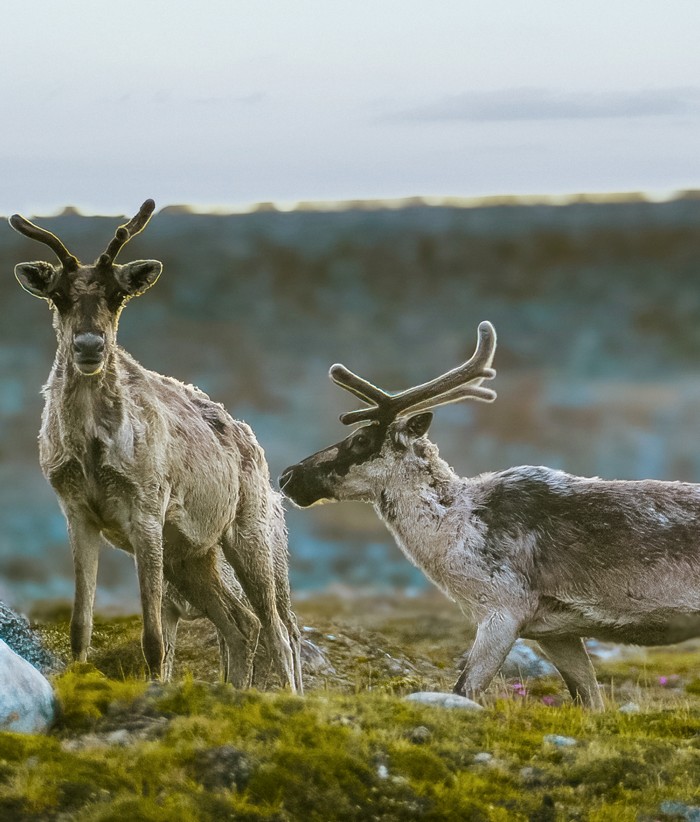
Rivière-Kovik – Proposed Aquatic Reserve © Marianne Ricard, KRG
What geographic names will be assigned to the proposed protected areas?
The official place name will be determined at the time permanent protection status is granted to the territory. It is understood that the representative bodies of Nunavik as well as the communities and Nations concerned with these territories will provide proposals for official geographic names to the Commission de toponymie du Québec.
This is the same approach that was successfully used in the creation of the national parks in Nunavik.
What are the different land categories in the James Bay and Northern Quebec Agreement (JBNQA) and the Northeastern Quebec Agreement (NEQA)?
Category I and IB-N – Indigenous title to lands managed and administered for the benefit of members by each Inuit community landholding corporation and by the Naskapi landholding corporation, respectively; have rights, as defined in the Agreements, including exclusive harvesting rights (and a right to establish and operate outfitting operations)
Category I and II-N – Lands in the public domain of the State over which Inuit, the Cree, and the Naskapi have rights, within the meaning of the Agreements, including exclusive harvesting rights (and a right to establish and operate outfitting operations)
Category III – Lands in the public domain of the State over which Inuit, the Crees, and the Naskapis have rights, within the meaning of the Agreements, including non-exclusive harvesting rights. In addition, trapping is exclusive to beneficiaries under agreement.
